Our Mission
Improve lives.
To improve lives through accessible healthcare, stronger education and greater access to skills, technology and opportunities.
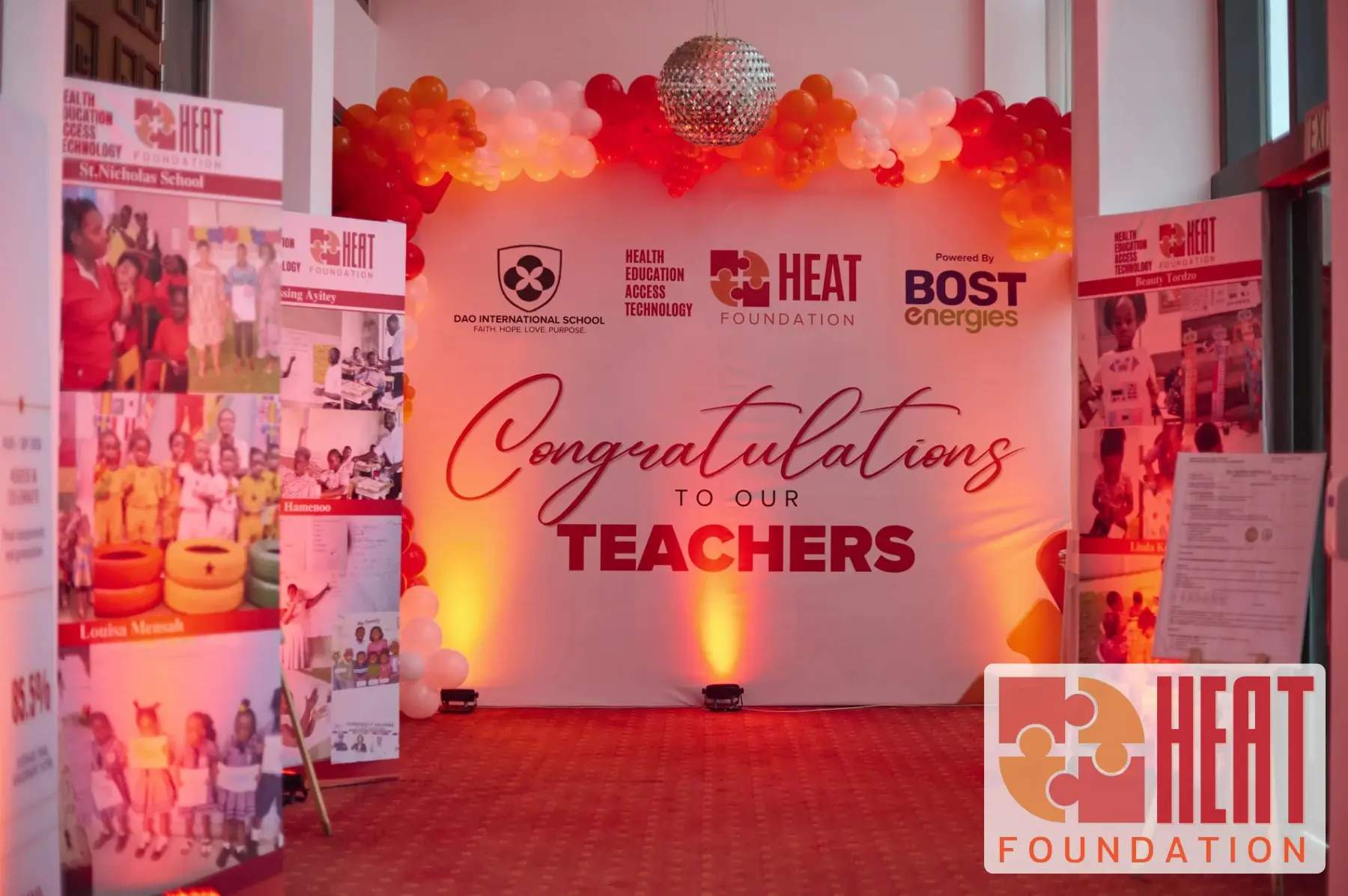
Explore the first HEAT teacher cohort through classroom evidence, teacher stories and the work behind their professional journey.
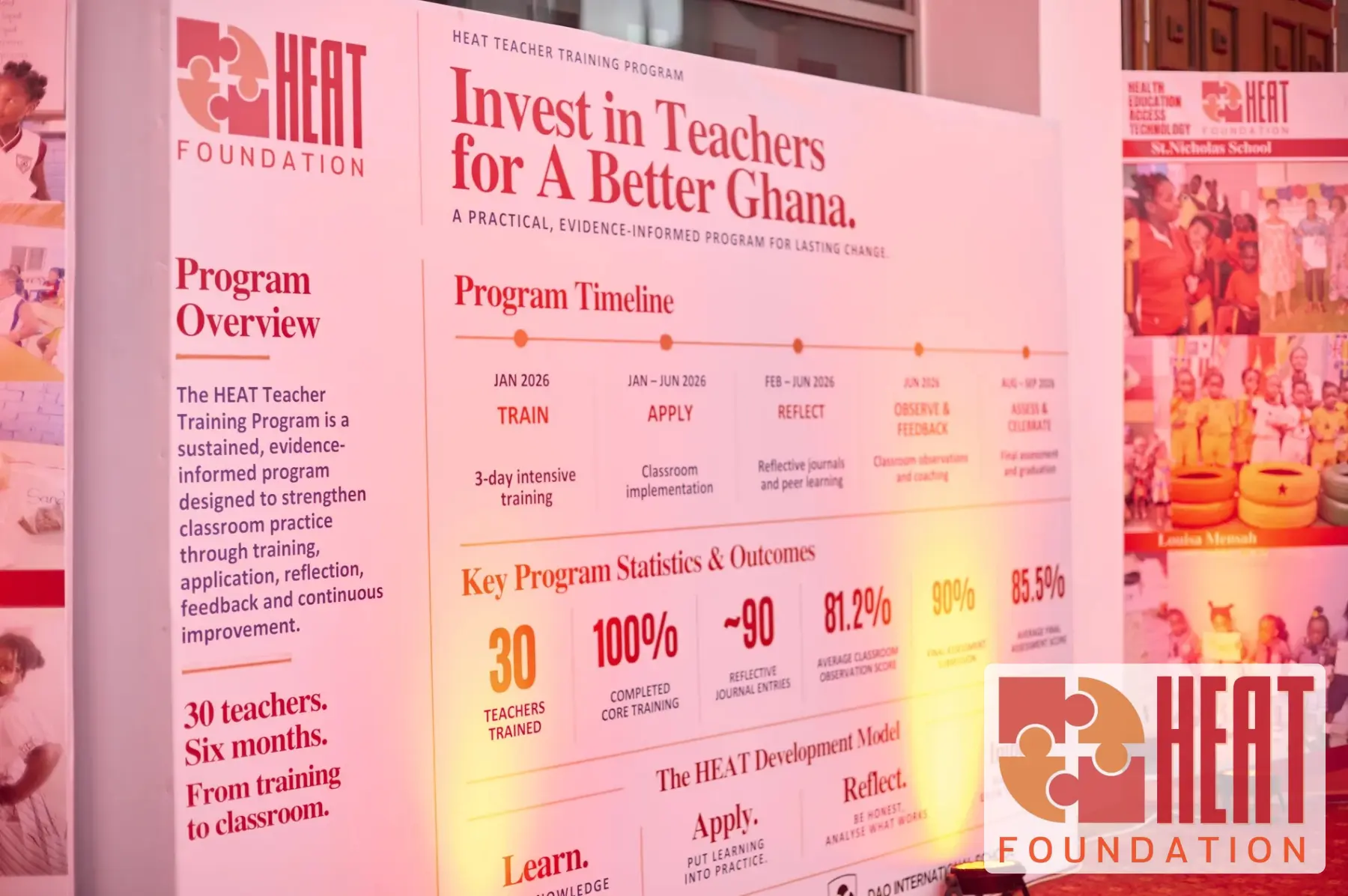
See how teachers translated professional learning into lesson planning, classroom practice and reflection.

Explore selected evidence from the first cohort and the thinking that sits behind their classroom practice.

HEAT Foundation and Dao International School invite schools and teachers to express interest in the Teacher Training Program.
Schools: send a teacher list and number of years in training. Teachers: send a sample lesson plan.
HEAT Foundation is a Ghanaian non-profit organisation advancing Health, Education, Access and Technology. We bring together people, expertise and resources to meet immediate needs and create opportunities for lasting change.
We invest in teachers through training, classroom application, coaching and reflection to strengthen effective, inclusive teaching. Our health initiatives promote preventive care through screenings, education and referrals, while our community outreach connects individuals and families to essential resources and practical opportunities. As we grow, we are exploring how technology can widen access to learning and strengthen our programs.
To improve lives through accessible healthcare, stronger education and greater access to skills, technology and opportunities.
A Ghana where everyone has access to the care, quality education and opportunities they need to realise their potential.
Completed our first Teacher Development Program across Accra in 2026.
In the participating teachers’ classrooms across 7 schools in 2026.
Received food hampers through our 2025 Christmas Food & Gift Drive.
Received gifts through our 2025 Christmas Food & Gift Drive.
We welcome businesses and organisations seeking to achieve their corporate social responsibility (CSR) goals. Together, we can design and deliver initiatives that align with your priorities and respond to community needs, with clear goals and a process for tracking results.
Partner With Us →HEAT brings together Health, Education, Access and Technology because stronger communities are built when people can learn, stay well, access opportunity and participate fully.

Preventive healthcare, health education, screening, early detection and practical support that helps people access care.

Teacher development and professional learning designed to strengthen practice, confidence and classroom leadership.

Practical community support, skills and pathways that help people respond to immediate needs and access opportunity.

Digital tools and technology used to expand access, strengthen learning, support connection and improve measurement.
Explore HEAT’s work through Health, Education, Access and Technology. Open an activity to see the need, the work, photographs and the partners behind it.
3 activities to explore
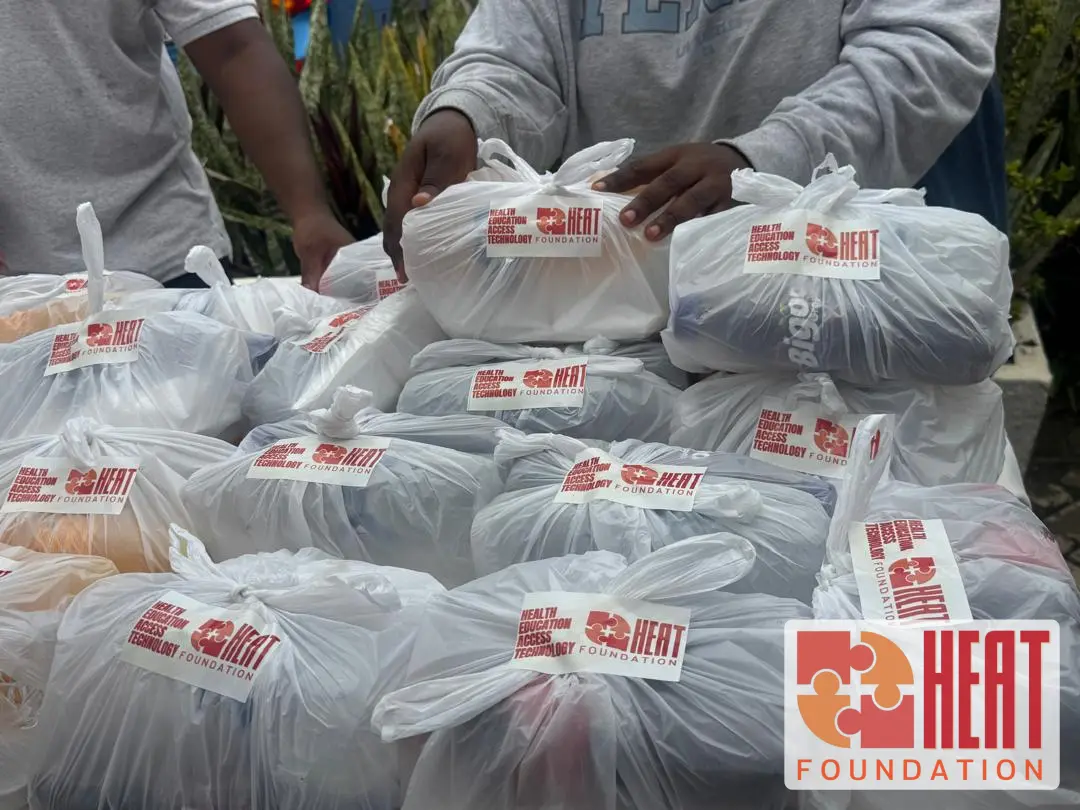
The need Community members needed access to preventive checks.
What HEAT did HEAT hosted free screening and connected participants needing further consultation with a doctor at Barnor Memorial Hospital.

The need Children receiving treatment needed opportunities for play and connection.
What HEAT did With Eggalla, HEAT brought crafts into the day ward, helped children build bunny companions and stocked three floors with activities, engaging over 80 children.
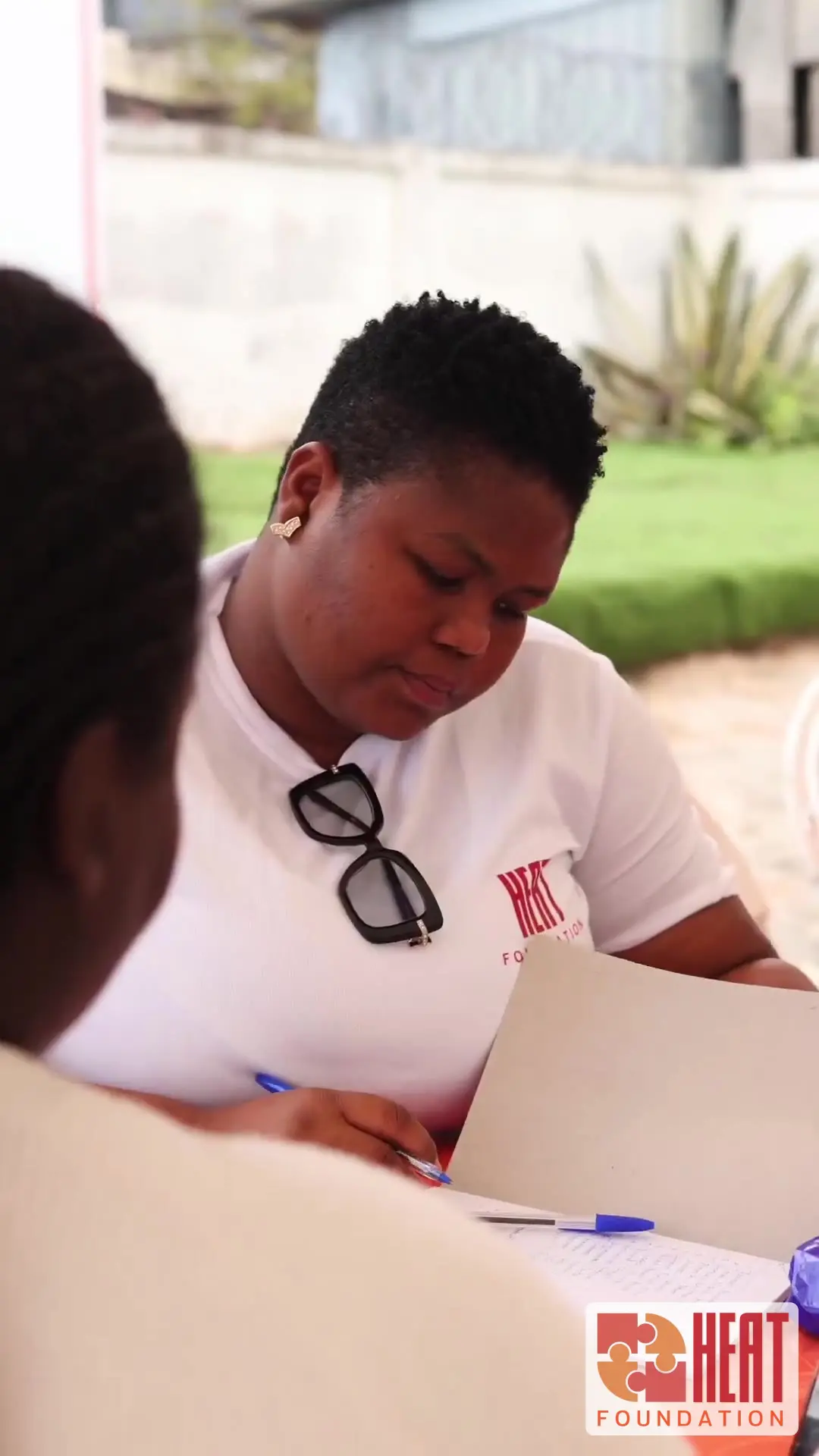
The need Early detection depends on access to information and screening.
What HEAT did HEAT screened over 200 guests, shared early-detection guidance and brought the conversation to two workplaces.
1 activity to explore
1 activity to explore
1 activity to explore
HEAT’s work meets immediate needs and invests in lasting capability. These results show the scale of the activity; the teacher stories show how practice began to change.
Follow the evidence, the milestones and the voices of the people involved.
trained in the first cohort; 100% completed core training.
guests screened during Cancer Week, with findings that called for further attention.
families received food hampers and children received gifts at Christmas 2025.
The digital Teacher Journey brings classroom images, lesson plans and reflections together.
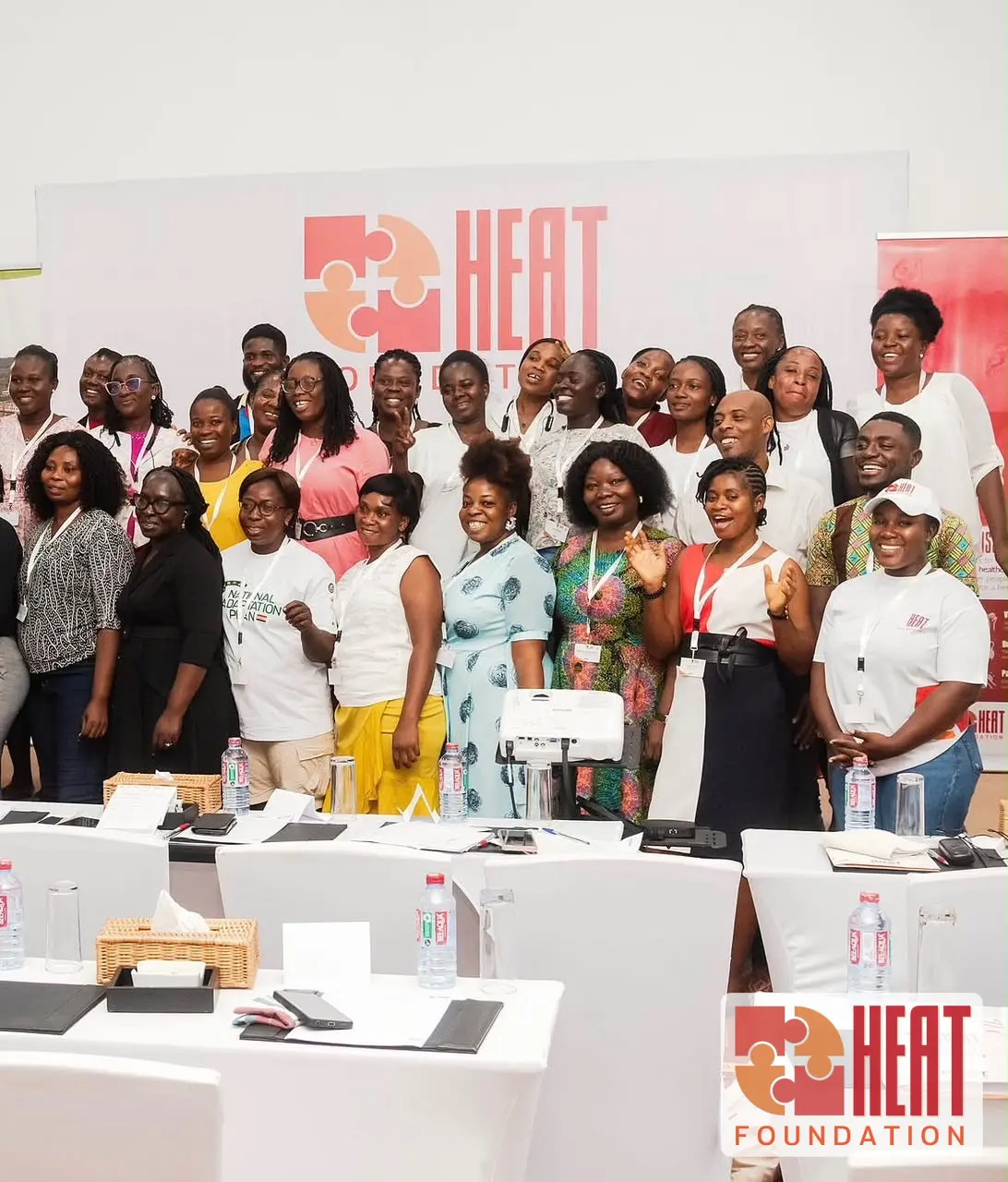
Thirty teachers joined a program designed to move professional learning into real classrooms. Across seven schools, their classrooms reached more than 650 students. From January through June 2026 the teachers trained, tried strategies with learners, reflected with peers and received observation and coaching feedback.
Final assessment and graduation followed in August–September. The measures below describe participation and assessed practice; the featured stories show what individual teachers learned and applied.
Program measures: approximately 90 journal entries, 22 classroom observations, 90% final assessment submission, and rubric-based average scores. The 650-plus figure describes students in participating teachers’ classrooms across seven schools; it does not measure a change in learner attainment. The other measures describe participation and assessed practice. View HEAT’s source overview ↗
The core practice phase ran for six months; assessment and celebration followed later in the year.
Three-day intensive training.
Classroom implementation.
Journals and peer learning.
Classroom observation and coaching.
Final assessment and graduation.
Based on HEAT’s program overview. View the original overview (PDF) ↗
Selected entry and final reflections, plans and observations show shifts in thinking and teaching. These examples are individual journeys, not a claim about every classroom.
Effectiveness centred on preparation and classroom control.
He asked whether learners understood, participated and made progress.
Observation showed that consistent classroom implementation was still developing.
Explore Albert’s story ↗Support often meant making tasks simpler.
She planned scaffolds that would build learner independence and higher-order thinking.
“I realised I was providing a ramp instead of a ladder.”Explore Afua’s story ↗
Verbal and abstract explanation was insufficient for a learner with hearing impairment.
She used signs, visuals, gestures and practical work to check understanding.
The original showcase board includes classroom and learner work.
Explore Gloria’s story ↗Follow HEAT’s activity over time; open a milestone to see the full story and partner credits.
HEAT planned for 300 people and screened more than 300 at Barnor Memorial Hospital. Participants needing another consultation were connected with a doctor there.
Supporters funded 360 holiday food hampers; HEAT topped up to 500 for families. Five hundred children also received gifts near Zongo Junction in Ablekuma Central.

Thirty teachers began with intensive training on 5–7 January. The program continued through classroom application, coaching, reflection and observation.
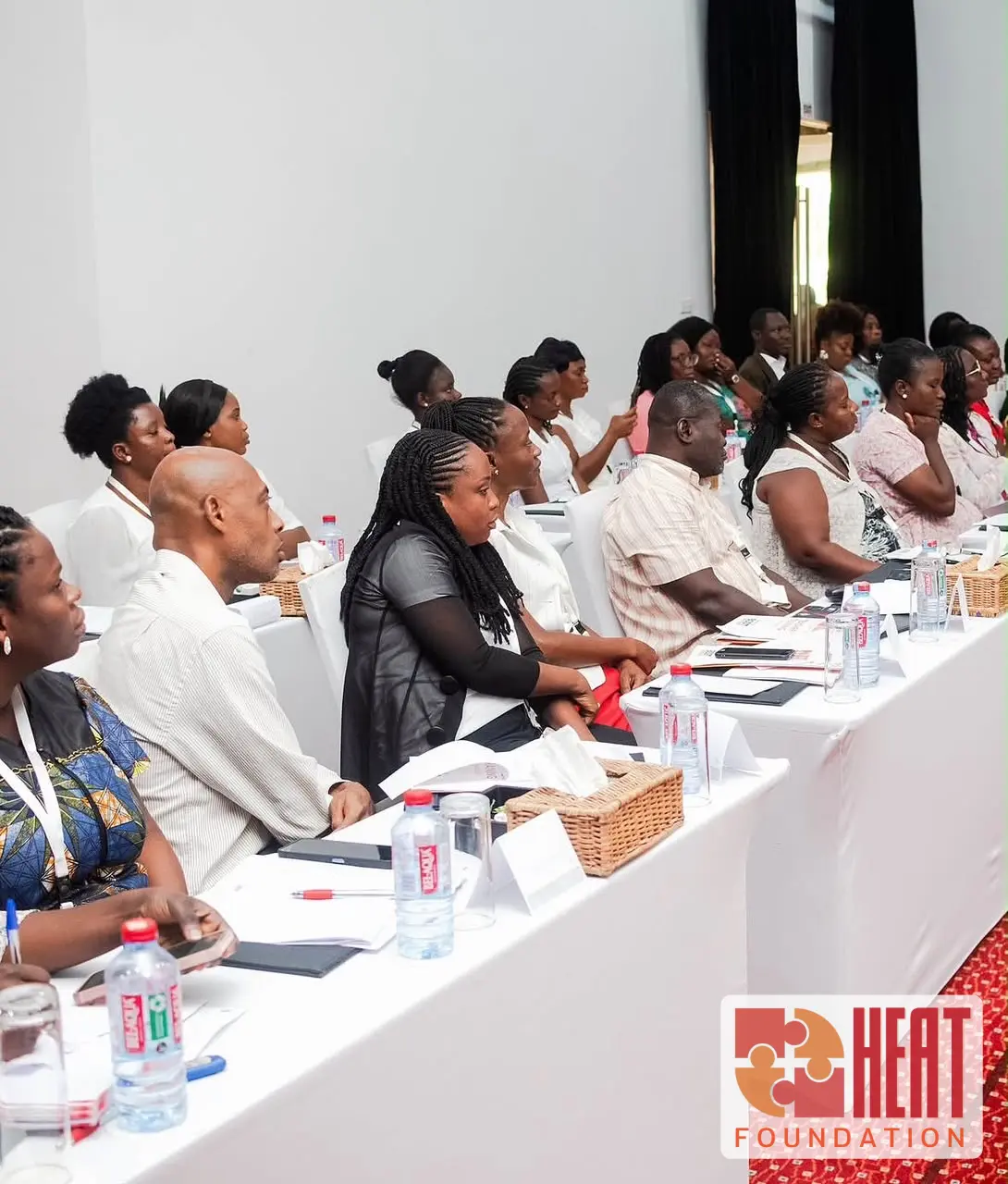
The team began with a goal of 50 children. Crafts during treatment, bunny companions, care packages and stocked ward libraries engaged more than 80 children across the paediatric unit.
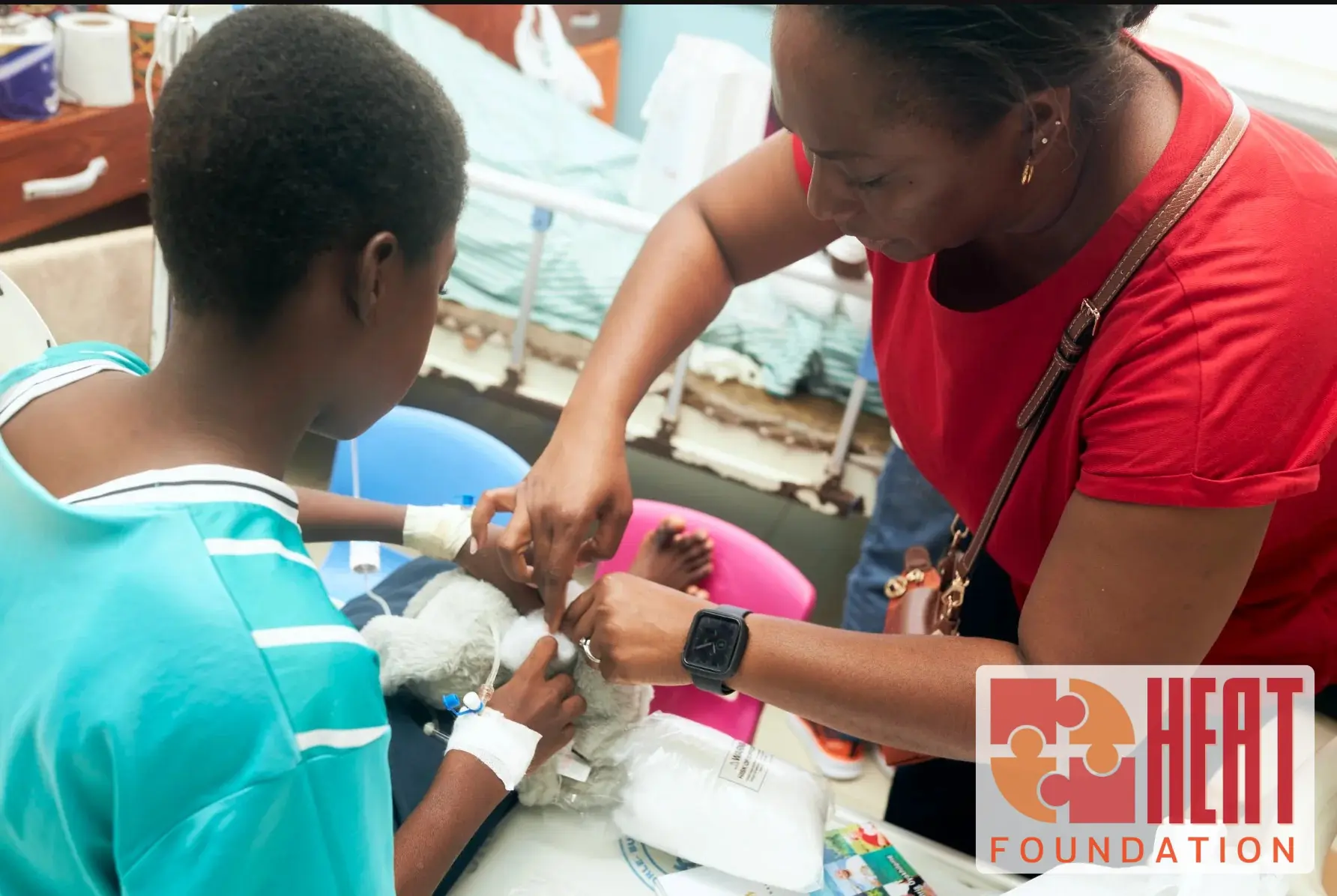
More than 200 guests were screened. Breast health education accompanied checks that identified two HPV-positive results, a breast lump, two enlarged prostates and about five high blood pressure findings needing follow-up.
After the core learning phase, teachers submitted final assessments and celebrated their work. Across seven schools, the participating teachers’ classrooms reached more than 650 students. HEAT’s overview records 90% final assessment submission alongside classroom observations and reflective journals; the digital showcase makes selected practice explorable.

Figures above reflect HEAT’s activity record. Screening findings are not diagnoses, and workplace staff totals are not counted as screenings. Teacher measures describe participation and documented practice, not a measured change in learner attainment.
Start with the first teacher cohort. More films show HEAT’s health outreach and community awareness.
A celebration of the teachers’ program journey and the work shared at close-out.
The opening intensive that launched six months of classroom application and reflection.
Screening, education and referral support with Ramzie Regenerate Medicare Centre.
Watch Cancer Week publicity ↗HEAT shared information about access to screening and health education.
Creative activity, therapeutic play and care for children receiving treatment at the Pediatric Oncology Unit.
Appreciation shared by the 2026 graduating class, Afua Aso Blankson Anaman and Sophia Gyamfi.
Browse eight featured teacher stories by theme, inspect lesson plans and see selected before-and-after reflections from the 30-teacher cohort.
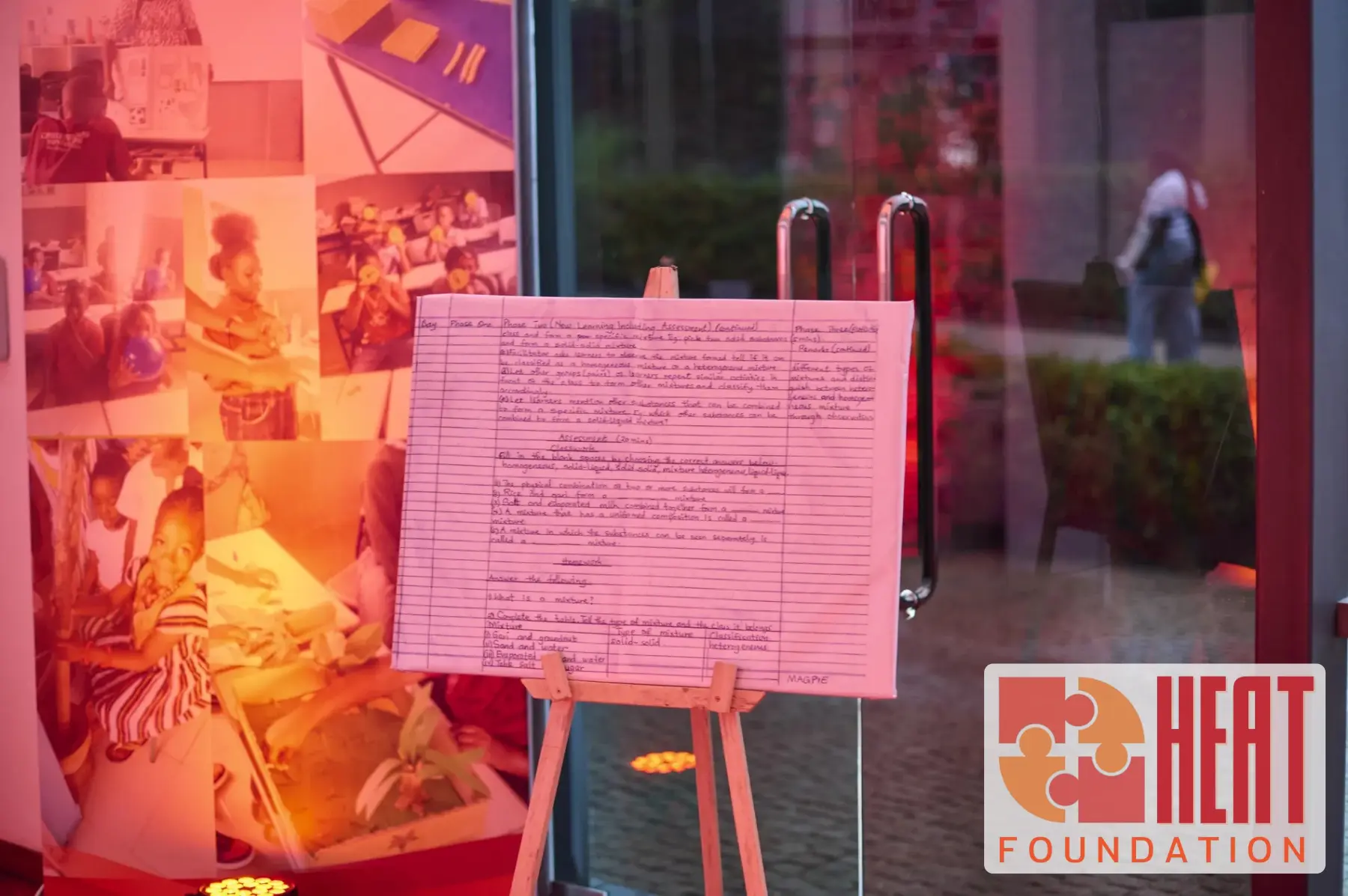
Meet the teachers and explore the material that informed their reflections.
The people behind HEAT bring together leadership, coordination and hands-on operational support to keep the Foundation’s work moving effectively.

Program Lead and Founder
Ashley connects education policy research with practical teacher development in Ghana. As HEAT’s Founder and Program Lead, she focuses on teacher capacity, stronger instruction and community-centred interventions.
Ashley Appenteng is an education policy specialist and practitioner committed to improving systemic educational outcomes in Ghana. She holds a Master’s degree in Education, Policy and Society from King’s College London and a Certificate in Public Policy Analysis from the London School of Economics, where she developed expertise in policy design, institutional evaluation and education reform.
Her postgraduate research examined Ghana’s Free Senior High School (FSHS) policy, exploring how schools navigate financial shortfalls under fee-free education and how teachers and administrators adapt to resource constraints to sustain learning outcomes.
As Founder of the HEAT Foundation, Ashley focuses on building teacher capacity, strengthening instructional practice and promoting community-centred educational interventions with measurable impact. She also led Jamboree Activity Centre, designing innovative programs for young learners, including online learning during the COVID-19 pandemic.
With experience across schools, government institutions and development partners, Ashley combines research-driven insight with hands-on implementation to advance policy-responsive, teacher-led transformation in Ghana’s education system.

Program Co-ordinator
Abigail coordinates HEAT’s people, projects and day-to-day operations. Her administrative and event experience helps the Foundation deliver programs and work with partners.
Abigail Ama Odzor is an experienced Administrative and Operations professional who supports the management and day-to-day operations of the HEAT Foundation. She works closely with the Executive Director, providing executive and administrative support, coordinating staff, supervising projects, and contributing to the Foundation’s efficient and effective operations.
Her responsibilities include human resources and staff management, stakeholder engagement, event planning and execution, booking coordination, and liaison with third-party vendors. She also collaborates with financial and operational teams to ensure that tasks and initiatives are delivered efficiently.
Known for her attention to detail, creativity, organizational skills, and problem-solving abilities, Abigail brings a hands-on, results-oriented approach to project management and organizational development. Her commitment to excellence and passion for supporting impactful initiatives contribute to the continued growth and success of the HEAT Foundation.
Abigail attended Ola Senior High School and furthered her education at the University of Professional Studies, Accra (UPSA). She has also pursued professional studies with the Institute of Chartered Accountants, Ghana (ICAG).

Program Co-ordinator
Wilhemina supports communications, records, training logistics and community outreach. She brings careful coordination and a commitment to youth and community development.
Wilhemina Ama Beyeden Tiamah is a dedicated and detail-oriented professional with a Certificate in Languages from the University of Media, Arts and Communication (UniMAC) and one year of professional experience.
She has experience in administrative support, communication management, records management, project assistance, and event coordination. In her role as Assistant Coordinator at HEAT FOUNDATION, she handles office communications, manages incoming and outgoing correspondence, maintains filing systems, manages office inventory, and ensures the confidentiality and security of sensitive documents. She supports project implementation by assisting with training programs, workshops, feedback collection, data tracking, and the preparation of materials for field activities.
Additionally, she contributes to the coordination of conferences, training sessions, and community outreach programs. She is passionate about community development and youth empowerment, and aspires to contribute her skills and dedication to initiatives that promote social impact and sustainable development.
HEAT's work is strengthened by organisations that contribute resources, expertise, venues and program support.
 Teacher program sponsor
 Cancer screening partner
 Teacher program partner
 Easter activity partner
 Easter activity partner
 Community health screening partner
 Cancer Week delivery partner
 Teacher program partner · Dao International School
 Easter activity partner
A future platform for sustained partnership and philanthropy. Speak with HEAT about getting involved.
Whether you would like to make a donation, support a program, explore a partnership or contribute your expertise, get in touch with HEAT Foundation.
Email HEAT to arrange a donation through the available payment method.
© 2026 HEAT Foundation. All rights reserved. HEAT’s original photographs and website content may not be copied, reproduced or reused without written permission. Partner logos and third-party materials remain the property of their respective owners.
Photography at HEAT events is undertaken with permission from participants or, where appropriate, their parents or guardians. For questions about a photograph or its use, please contact HEAT Foundation.
